

India’s Vehicle Health Report by Orbit
India is home to one of the largest and fastest-growing vehicle populations in the world. With over 35 crore vehicles registered and millions added each year, our roads are bustling with movement, mobility and modernity. But underneath this acceleration lies a slower, more dangerous trend: the health of these vehicles is being ignored.
Expired insurance, lapsed PUCCs, unpaid challans and missing documentation are more than technicalities. They are silent enablers of road accidents, air pollution and revenue loss. This report offers a state-level diagnostic of India’s vehicle health, drawing from government data, market reports and real-time insights gathered through platforms like Orbit by Cars24, which has quietly emerged as a barometer of compliance across the country.
Why Vehicle Health Matters Now More Than Ever
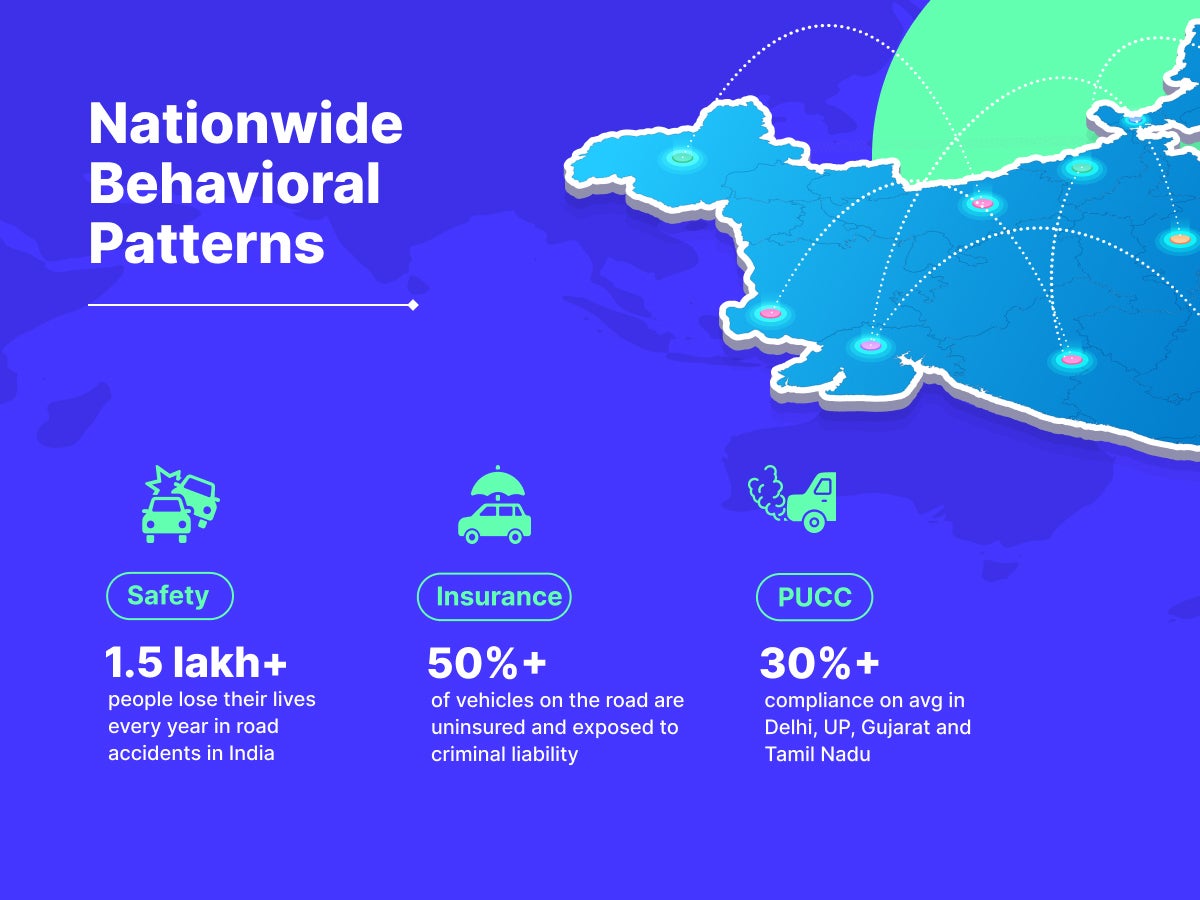
Nearly 1.5 lakh people lose their lives every year in road accidents in India. Many of these involve vehicles without valid insurance or fitness documentation. And over 50% of vehicles remain uninsured, exposing owners to fines, criminal liability and denial of claims. Platforms like Orbit have started offering timely nudges and digital records, but the challenge remains systemic.
Similarly, PUCC violations contribute directly to toxic emissions. Real-world testing shows even BS-VI vehicles can exceed limits without enforcement.
To make matters worse, more than ₹3.18 lakh crore in pending challans sits uncollected. Courts are flooded with cases as non-compliance is choking enforcement systems.
In such a scenario, platforms like Cars24 Orbit have revealed that most users only respond to compliance alerts after violations are issued, not before. It’s interesting to note that awareness is particularly low across non-metro cities, especially among new and rural vehicle owners.
Challans and its challenges
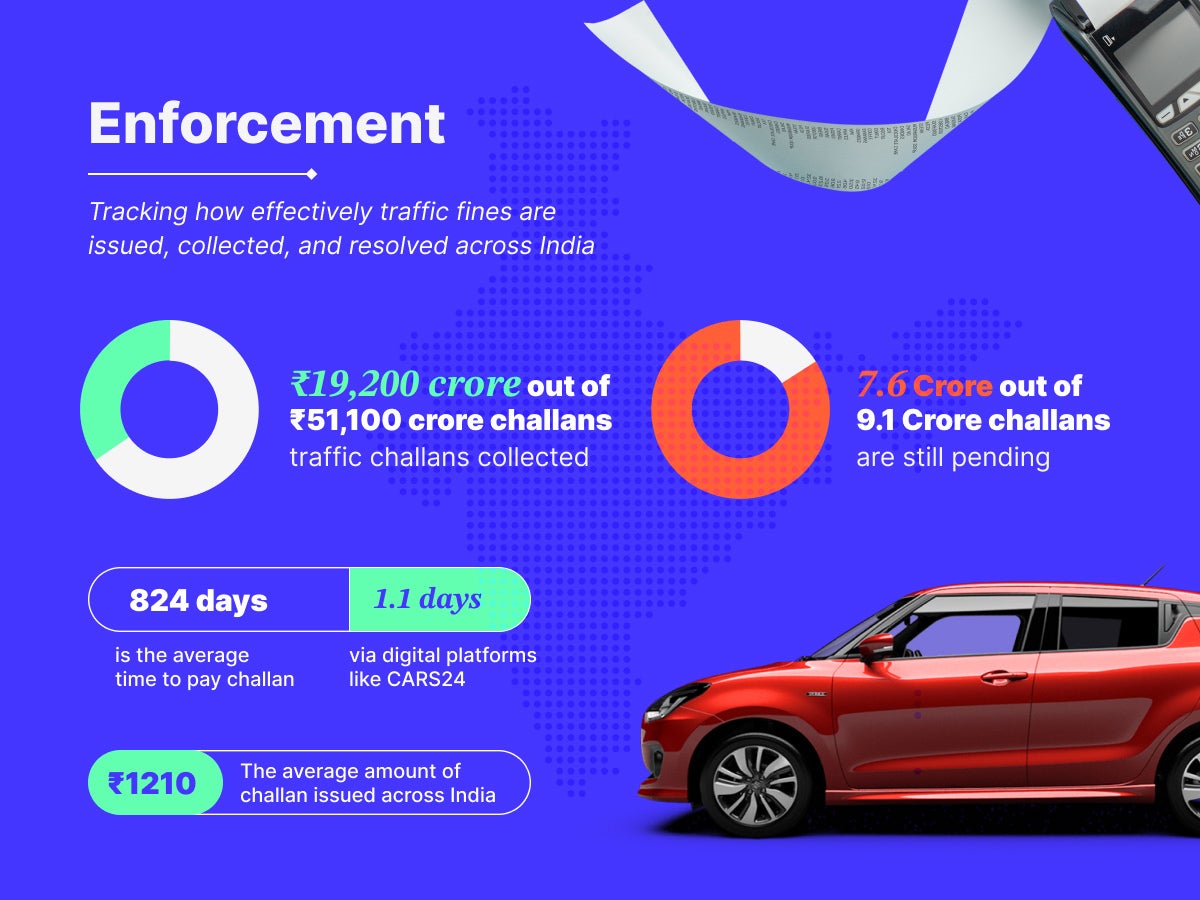
In our research, we learned that ₹5.11 lakh crore in traffic challans were issued between 1st Jan 2015 to 11th June 2025. However, only ₹1.92 lakh crore collected so far. Shockingly the challans per expired documents (Enforcement rate) is less than 7% in major states like Gujarat, Rajasthan, Uttar Pradesh, Telangana, Madhya Pradesh, Karnataka and Maharashtra having enforcement rate of just 1.9% (Out of every 100 expired Insurance and PUCC only 2 challan are issued)
We also found that 9.15 crore worth of challans were sent to court. Out of which, 7.69 crore are still pending in the system.
Interestingly enough, the average time to pay challan in India is 842 days (2.3 years) by users themselves. However, with online intervention, this figure drops to 1.14 days via digital platforms like Cars24. Also, 20% of the challans issued average above ₹1210.
Challans: North’s Gentle Nudge vs South’s Thunderclap
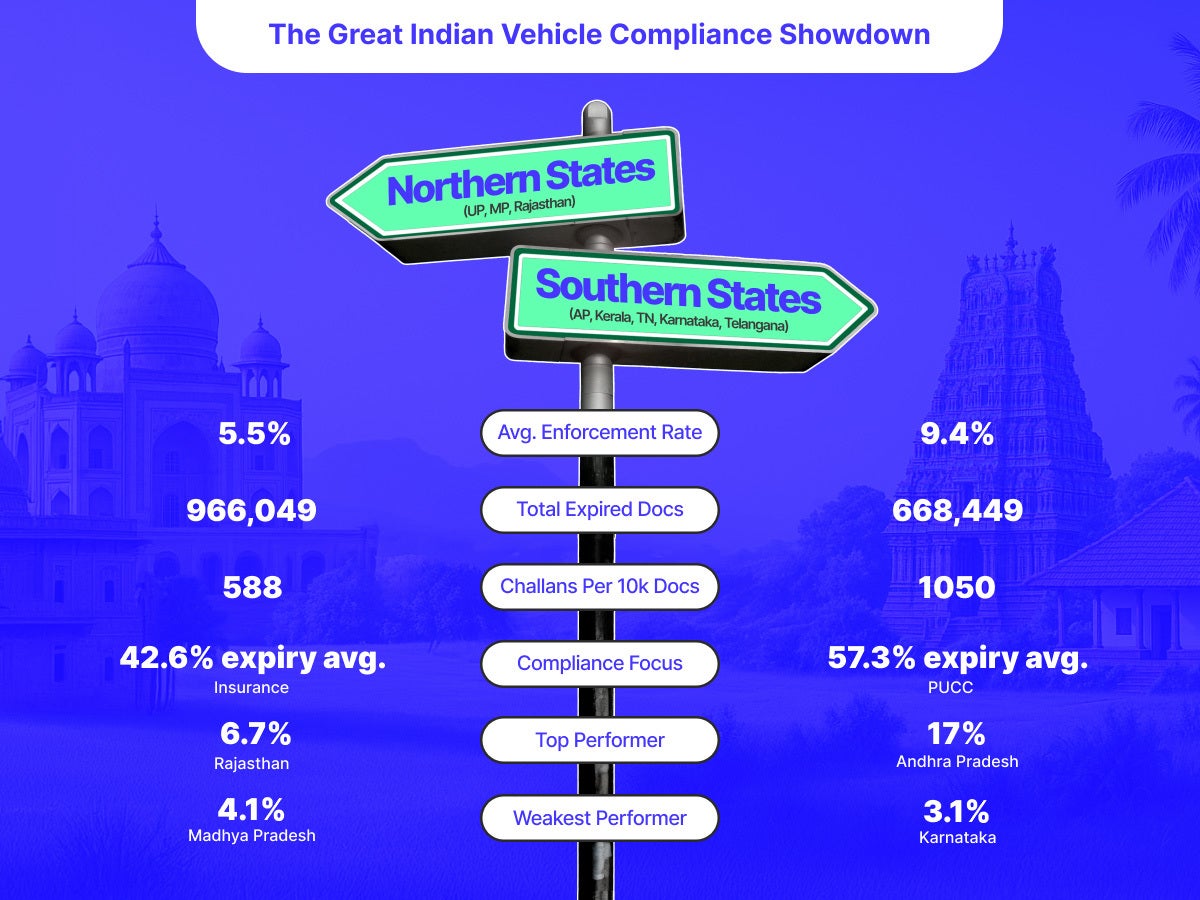
For every 10,000 expired documents, the north issues about 588 challans—a polite reminder. The south? A resounding 1,050! If you’re a non-compliant vehicle in Chennai or Hyderabad, odds are you’ll get a digital slap on the wrist before you can say “PUCC.”
Insurance vs. PUCC: What’s the Real Drama?
Up north, expired insurance is the headliner. Down south, it’s all about expired PUCCs because nothing says “I care about the planet” like a valid pollution certificate (or, well, a fine for not having one).
The South is stricter and quicker to fine, while the North has more expired paperwork and slower enforcement. If you’re driving, keep your docs handy, especially below the Vindhyas!
Fastag Mania
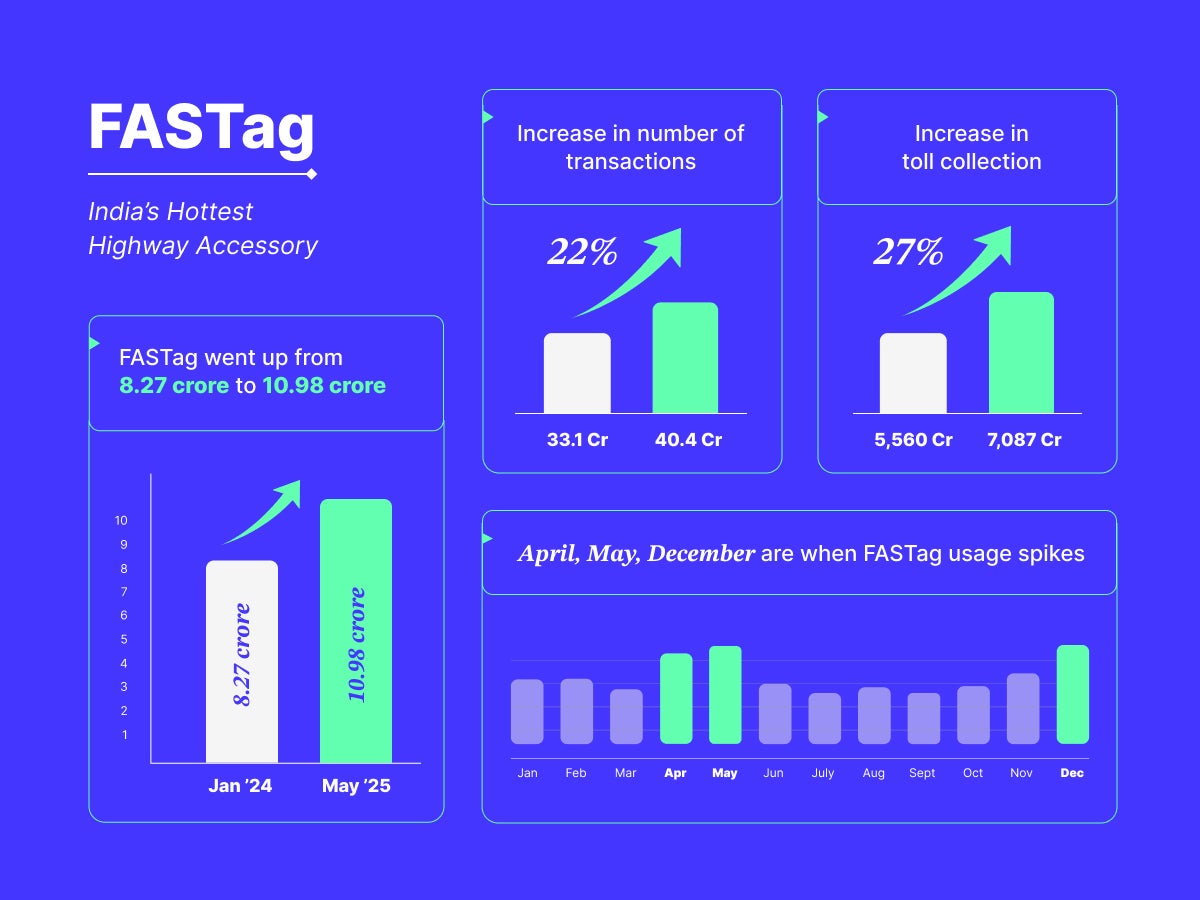
FASTag grew from 8.27 crore tags in Jan ’24 to 10.98 crore by May ’25. That’s a turbocharged 33% jump! Turns out, nothing motivates Indians like a mandatory rule and a long toll queue.
FASTag has seen an amazing adoption rate, with transactions up 22% (from 331M to 404M/month) and toll collection up 27% (₹5,560 Cr to ₹7,087 Cr/month).
Different people have different approaches to maintaining FASTag balance. The average FASTag balance happens to be ₹408.2 but some folks are living on the edge with -₹150, while others are rolling with ₹10,000 and upwards!
It’s fair to suggest that FASTag isn’t just a sticker. It’s your passport to India’s highways, your wallet’s new best friend and the toll booth’s worst nightmare. Next time you hit the road, remember: beep, pay and drive away: no cash, no chaos, just pure highway bliss!
Strategic Recommendations
- Policy Integration: Mandate health checks like PUCC and insurance at the point of registration, resale and road tax renewal.
- Incentivise Compliance: Offer discounts on insurance or tax renewals for vehicles with consistently clean health records.
- Fleet Focus: Encourage logistics and cab aggregators to use vehicle health dashboards and AI-based risk ratings.
- Data Partnerships: Allow platforms like Orbit to sync with Vahan, RTO databases and FASTag to create a unified compliance history.
- Awareness Campaigns: Run state-specific compliance drives using regional insights. For example, target rural UP with mobile PUCC vans and push SMS alerts in Tamil Nadu.
Final thoughts
India's automotive future will not be defined by how many vehicles we register, but by how well we maintain them. The road ahead demands accountability, awareness and access to tools that make compliance easier.
Vehicle health is no longer just a personal choice. It is a shared responsibility. And platforms like Orbit are quietly proving that with the right nudges, better drives can lead to better.
Loved this article?
Hit the like button
Share this article
Spread the knowledge
More from the world of Cars24
Introducing FASTag annual pass
If you are someone who travels frequently on National Highways, especially for daily commutes or regular trips, the FASTag Annual Pass is a smart investment.
Ethanol is Great for the Planet, but Is It Great for Your Car?
There is no denying it, ethanol is the direction the industry is heading. But millions of Indians still rely on vehicles that weren’t designed for it.
Introducing Crashfree India
Crashfree India is a public foundation being launched to take a long-term approach to road safety. It’s not a campaign. It’s not about blame. It’s an infrastructure initiative.