

What to Do After a Road Accident
According to the MoRTH road accident report 2023, we lost 1,72,890 lives, which is approximately 36% (35.98%) of 4,80,583 accidents (Total accidents reported in 2023); both numbers are significantly higher than they should be. Even then, when we see an accident happen, we either freeze or simply walk away. But for how long can we keep ignoring it?
The truth is, the golden hour is precious, and if you know the basics of First Aid, you could save a life. Yes, a doctor or a professional is vital in saving a life, but a calm mind and some simple steps could do wonders. Here's a complete, conversational guide you can actually use if you ever face such a situation.
First Things First: Safety & Mindset
- Carry a First-Aid kit while travelling - Your life is in your hands. Carrying a first aid kit is mandatory whenever you travel or embark on a journey.
- Your safety comes first - Make sure the scene is safe (no fast-moving traffic, fire, exposed wires, etc.). Don't put yourself in danger.
- Protection - If available, use gloves or a face shield when handling blood.
- Consent - If the person is conscious, ask before helping ("Can I help you?").
Step 1 – Call for Help
If you see an accident: Immediately dial 112 and share the location of the incident, the number of injured people, and their condition (breathing/bleeding).
If you have a smartphone, use live location sharing or the 112 India app.
Download the app from:
Ask bystanders to help: Someone can get a clean cloth, control traffic, or guide the ambulance.
Step 2 – ABC Check (Airway, Breathing, Circulation)
Video Reference: Watch ABC Check Tutorial
This is the heart of first aid.
A – Airway
If the person is unconscious, gently tilt the head back and lift the chin to keep the airway open (unless you suspect a spinal injury).
Important: If you suspect a neck or spinal injury, for example, after a high-speed collision, a serious fall, or a blow to the head, do not attempt to move or tilt the person's head, as even small movements can worsen the damage. In such cases, airway management becomes more complex and should be handled only by trained medical professionals equipped to stabilize the spine while ensuring the person can breathe.
B – Breathing
Look, listen, and feel for breathing.
If there's no normal breathing, start CPR right away.
C – Circulation
Check for major bleeding. If present, control it immediately (see next step).
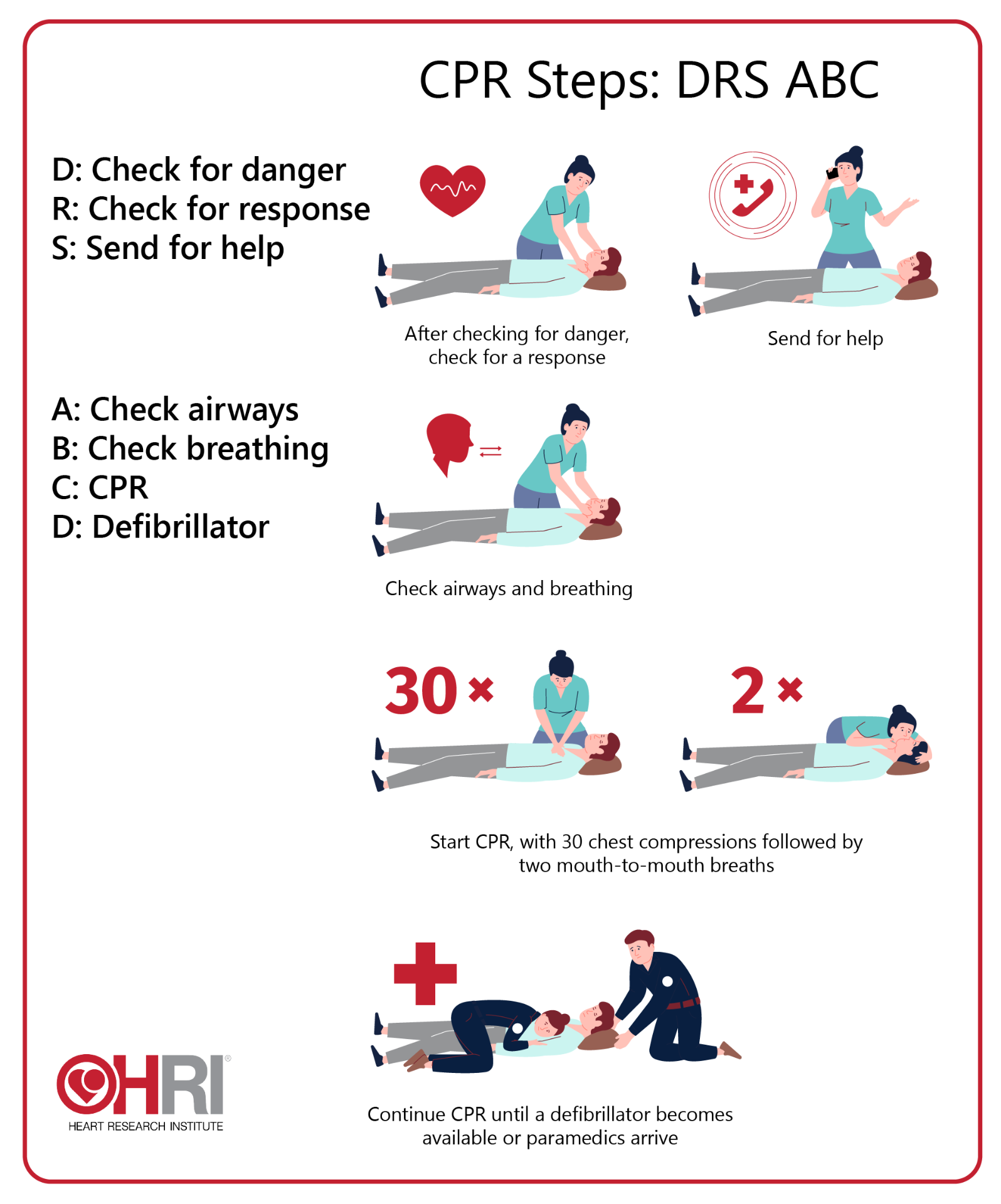
Step 3 – CPR (If the Victim is Not Breathing)
If the victim is unresponsive and not breathing normally:
- Chest compressions: Position the base of your palm in the center of the chest, lock your elbows, and press hard and fast, 100-120 compressions per minute, at a depth of 5-6 cm (adults).
- Rescue breaths: Give 30 compressions, followed by 2 breaths.
- If you're not trained or not comfortable giving breaths, do hands-only CPR (continuous compressions).
- Don't stop until professional help arrives or the person shows signs of life.
Video Tutorial: Learn CPR Step by Step
Pro tip: keep the beat of "Stayin' Alive" in your head for the right rhythm.
Step 4 – Control Bleeding
Heavy bleeding can be fatal.
- Apply direct, firm pressure with a clean cloth, gauze bandage, or even a handkerchief.
- If an object is stuck inside the wound (like glass or metal), do not remove it. Instead, place padding around it to stabilize until help arrives.
- For severe limb bleeding that won't stop with pressure, a trained person may use a tourniquet.
Step 5 – If Unconscious but Breathing: Recovery Position
If the victim is unconscious but still breathing, place them in the recovery position (lying on their side, with head tilted slightly back) so their airway stays clear and they don't choke if they vomit.
Be extra cautious if you suspect spinal injury; minimize movement.
Step 6 – Helmets & Seatbelts
Helmet:
If the rider is breathing and conscious, do not remove the helmet; it supports the neck. Only remove it if the person isn't breathing and CPR is necessary, and ideally with two people carefully supporting the head and neck.
Seatbelt:
Only cut/remove a seatbelt if the person is trapped in a dangerous situation (fire, drowning). Otherwise, let professionals handle it.
Step 7 – Stay Calm & Comfort
- Stay calm, your reassurance makes a huge difference.
- Keep the person warm (cover with a jacket/blanket).
- Do not give food or water to an unconscious person.
- Note important details: time of accident, first aid given, any changes in breathing, as this helps doctors later.
Basic First Aid Kit Essentials
A small kit in your car or bag can save precious time. Here's what it should include:
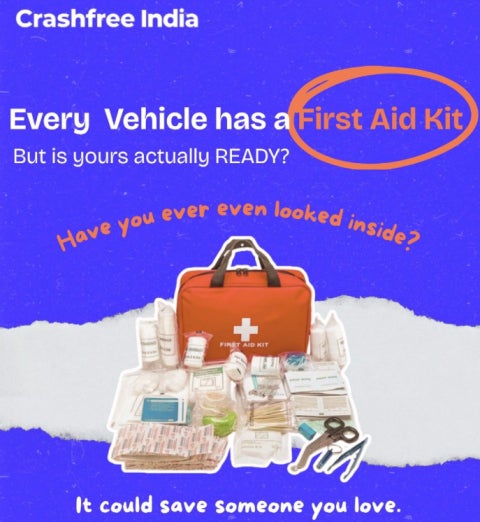
- Sterile bandages, gauze pads, adhesive tape
- Roller bandage
- Surgical tape
- Crepe bandage
- Cold pack, thermal blanket
- Transparent film dressing with non-adherent pad
- Non-woven cohesive moderate compression bandage
- Sterile dressing kits
- Elastic adhesive bandage
- Flexible splints (small/medium/large)
Quick Cheat Sheet (to Remember in the Moment)
Scene safe → Call 112 → ABC check → Stop bleeding → If no breathing, CPR → Keep calm until ambulance arrives.
Conclusion
The biggest mistake in an accident is panic and inaction. With these simple steps, you can bridge the gap until professional help arrives.
Let's commit to not just keeping ourselves safe with helmets and seatbelts, but also being prepared to help others.
Remember: The right action at the right time can save a life.
Loved this article?
Hit the like button
Share this article
Spread the knowledge
More from the world of Cars24
The India We Are Still Building: Independence Day, Cars24 and the Road to a Crashfree India
On Independence Day, Vikram writes to Autonauts about the part of India Cars24 has chosen to build through Crashfree India, from road audits and compensation support to police vehicle intelligence, in pursuit of zero road fatalities by 2040.
Rethinking Road Safety: Beyond Human Error
How Project Rakshak changed the way I think about road crashes, road design and what it takes to prevent them
Crash Claim Compensation Guide
Keep your documents ready, follow the steps, and remember: this compensation is your right. Help is available, and you don't have to walk this road alone.